หลวงปู่ทิม อิสริโก
Luang Pu Tim
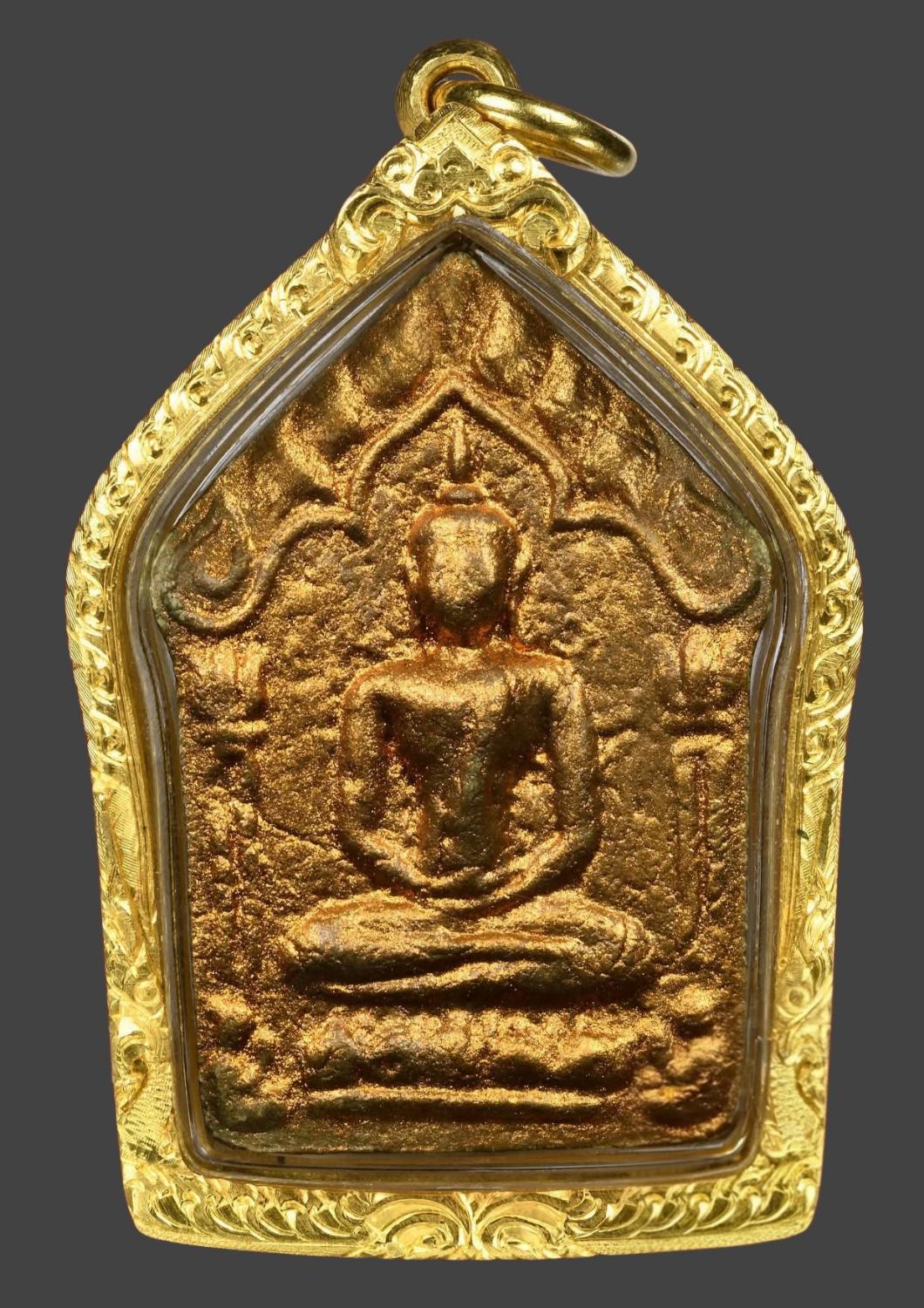
Abbot of Wat Lahan Rai in Rayong. Monastic name Issariko, rank Phra Khru Phawana Phirat. What later memory keeps is not the rank. It is Prai Kuman powder, and the Khun Paen made from it.
Temple · Wat Lahan Rai, Rayong · Life dates · 1879–1975 (B.E. 2422–2518)
Names and readings
- Thai name
- · หลวงปู่ทิม
- Chinese name used here
- · 龍婆添
- Mandarin near-sound
- · 龍婆添
- Cantonese near-sound
- · 龍婆添
- English spelling
- · Luang Pu Tim
The essay uses the short name after this. A near-sound helps Chinese readers say the name. It is not a second official name.
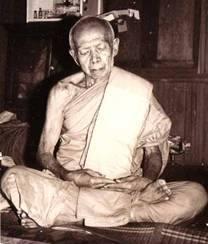
Luang Pu Tim
Abbot of Wat Lahan Rai in Rayong. Monastic name Issariko, rank Phra Khru Phawana Phirat. What later memory keeps is not the rank. It is Prai Kuman powder, and the Khun Paen made from it.
Luang Pu Tim, monastic name Issariko, rank Phra Khru Phawana Phirat, was abbot of Wat Lahan Rai in Rayong. He was born under Rama V and died under Rama IX. Disciples remember a plain table and one meal a day. The market remembers something else: Prai Kuman powder. Khun Paen became a name among Chinese-speaking buyers largely because of that powder. The man, the temple, the powder and the tablet are kept apart below.
Birth and family
16 June 1879 (B.E. 2422), a Friday, at Ban Hua Thung Ta But, Lahan subdistrict, Ban Khai, Rayong. Later maps often call the same village Moo 1 of Nong Bua. His lay name was Tim Ngamsi. His father was Chae, his mother In. Three brothers; he was the second. His mother was the younger sister of Luang Pu Sang, so he was Sang’s nephew. Sang founded Wat Lahan Rai, first called Wat Rai Wari. Press compilations and local accounts agree on this stretch, and it can stand as the start.
Ordination and the abbacy
At seventeen his father sent him to Luang Pho Singh at Wat Lahan Yai, to learn Thai and Khmer letters, for about a year, then home to work. Some accounts add four years as a soldier in Bangkok from about nineteen, and a return after discharge. Not every biography has that sentence. It is noted here, and not made a required stop.
Full ordination was on 7 June 1906 (B.E. 2449), a Saturday, the seventh of the waxing moon in the sixth month. Accounts place the rite in the sima of Wat Lahan Rai. The preceptor was Phra Khru Khao of Wat Thap Ma, the kammavaca teacher Ajahn Ket, the anusavana teacher Luang Pho Singh. Other pages swap Ket and Singh. The names agree; the seats do not. The monastic name was Issariko. He stayed at Wat Lahan Rai. Villagers asked him to be abbot, and lists often count him as the sixth. Some date the start to the year after ordination, 1907 (B.E. 2450). He remained until death, repaired the monks’ quarters, and in old age still saw the hall and the sermon hall finished.
The rank came in three steps. In 1935 (B.E. 2478), the lower Phra Khru. In 1954 (B.E. 2497), Phra Khru with a certificate. On 5 December 1964 (B.E. 2507), the title Phra Khru Phawana Phirat, with the fan of office. Disciples made a first commemorative medal for that promotion, usually dated 1965 (B.E. 2508). The village still said Luang Pu Tim, not the full style.
Prai Kuman powder, and Khun Paen
His fame is the Prai Kuman powder. The longer Thai name is often Prai Kuman Maha Phut. Disciples and the market say the powder follows a recipe he had learned, that the chief part comes from a child dead in the womb or in a hard birth, and that the child’s spirit is invited to guard the wearer. In the devotional telling the method is heavy, and hard to obtain. This page marks that stretch as oral account. An oral account can explain why the name is loud. It is not a laboratory test, and it does not prove that every Khun Paen on the market carries the same batch.
The years also need to be kept apart. The market chronology usually says the powder was prepared around the middle of 1972 (B.E. 2515), first for donors to the hall repairs, and pressed into objects around 1974 (B.E. 2517): Khun Paen, small self-portrait tablets, Look Om, and powder set into the base of other pieces. That is the timetable most often repeated. It is not a temple ledger in our hands. Later pieces under the same name are many. Ask the year, the mold, and whether the colour and the back match a photograph from the time, before the recipe story.
Death
At 11 p.m. on 16 October 1975 (B.E. 2518) he died of old age in front of the chanting hall at Wat Lahan Rai, after twenty-three days in Somdet Hospital at Si Racha. He was ninety-six, with sixty-nine vassas. One page says 18 October. This page uses the 16th. The body was kept at the Phawana Phirat hall in the temple. The royal cremation was in 1983 (B.E. 2526), most often dated 16 March, still at Wat Lahan Rai; another account says 6 March. Cremation and death are about eight years apart. The two years are not one day.