หลวงพ่อสด วัดปากน้ำ
Luang Phor Sot
Luang Phor Sot, abbot of Wat Pak Nam in Bangkok. Monastic name Chanthasaro. On a full-moon night in B.E. 2460 (1917) he said he had entered the method later called dhammakaya. He died in B.E. 2502 (1959).
Temple · Wat Pak Nam, Phasi Charoen, Bangkok · Life dates · B.E. 2427–2502 (1884–1959)
Names and readings
- Thai name
- · หลวงพ่อสด
- Chinese name used here
- · 龍婆術
- Mandarin near-sound
- · 龍婆術
- Cantonese near-sound
- · 龍婆術
- English spelling
- · Luang Phor Sot
The essay uses the short name after this. A near-sound helps Chinese readers say the name. It is not a second official name.
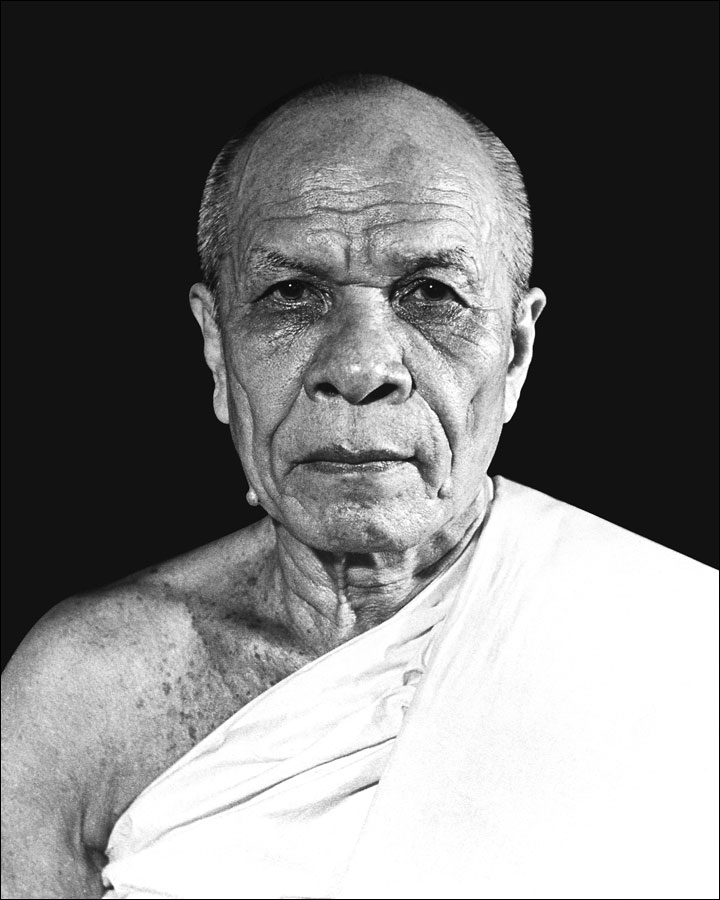
Luang Phor Sot
Luang Phor Sot, abbot of Wat Pak Nam in Bangkok. Monastic name Chanthasaro. On a full-moon night in B.E. 2460 (1917) he said he had entered the method later called dhammakaya. He died in B.E. 2502 (1959).
Luang Phor Sot was abbot of Wat Pak Nam in Phasi Charoen, Bangkok. Lay name Sot, written in full Sot Mikaewnoi. Monastic name Chanthasaro. His last rank was Phra Mongkhon Thepmuni. Wat Pak Nam stands at a canal mouth in Bangkok. The name means the mouth of the water. The temple is recorded from the middle Ayutthaya period, long before he was born. He is the abbot who built the temple up again. He is not the founder.
Birth and ordination
Friday 10 October B.E. 2427 (1884), at Song Phi Nong in Suphan Buri. The father was Mai, the mother was Som, and they farmed. At twenty-two he was ordained at Wat Song Phi Nong. The monastic name was Chanthasaro. Afterwards he stayed at Wat Pho in Bangkok.
Arrival at Wat Pak Nam
In B.E. 2459 (1916) he was ordered to leave Wat Pho and act as abbot of Wat Pak Nam. In B.E. 2463 (1920) he was formally appointed abbot. Acting and formal appointment are two years. Do not write them as one year. After he arrived, the temple grew again.
The night of the dhammakaya
The Wat Pak Nam line tells the episode this way. On a full-moon night in B.E. 2460 (1917), he was meditating at Wat Bot Bon in Bang Khu Wiang, Nonthaburi. That night he said he had entered an inner dhamma. Later he called that method dhammakaya. He used the word as the mark of the meditation taught at Wat Pak Nam. Disciples carried it outward. A later supreme patriarch, Pun, wrote that Luang Phor Sot of Wat Pak Nam raised the word dhammakaya, and the disciples spread it in every direction. This is the line's own account, and it is also how a later figure in the sangha recorded it. It says that what he taught was a way of sitting in meditation. It is not proof of any amulet.
Rank, illness, and death
In B.E. 2500 (1957) he received the thep rank Phra Mongkhon Thepmuni. From about March of that year he had high blood pressure. The illness lasted more than two years. On 3 February B.E. 2502 (1959), after three in the afternoon, he died peacefully in the Mongkhon Chansara building at Wat Pak Nam. He was seventy-five. The vassa count is fifty-three. A vassa is one rains retreat after full ordination, so fifty-three vassas are about fifty-three years as a monk.
After death the temple did not cremate the body at once. It was placed in a memorial hall in the temple for people to pay respect, and that is still the case. So a visitor to Wat Pak Nam can still pay respect to the body. That does not mean he did not die. The date of death is 3 February B.E. 2502. The body remaining is the way the temple has kept it.