หลวงพ่อเงิน วัดบางคลาน
Luang Phor Ngern
A monk of Wat Bang Khlan in Phichit. Monastic name Phutthachoti. His lay name, Ngern, means silver or money. The market calls him a wealth monk. He died in B.E. 2462 (1919). Casts made in his name after that year are not work from his lifetime.
Temple · Wat Bang Khlan, Phichit · Life dates · B.E. 2351 or 2353 – 2462 (1808 or 1810 – 1919)
Names and readings
- Thai name
- · หลวงพ่อเงิน
- Chinese name used here
- · 龍婆銀
- Mandarin near-sound
- · 龍婆銀
- Cantonese near-sound
- · 龍婆銀
- English spelling
- · Luang Phor Ngern
The essay uses the short name after this. A near-sound helps Chinese readers say the name. It is not a second official name.
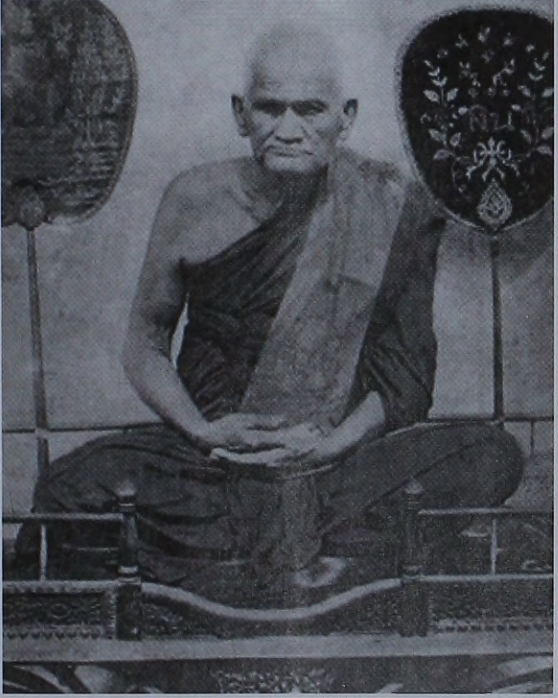
Luang Phor Ngern
A monk of Wat Bang Khlan in Phichit. Monastic name Phutthachoti. His lay name, Ngern, means silver or money. The market calls him a wealth monk. He died in B.E. 2462 (1919). Casts made in his name after that year are not work from his lifetime.
Luang Phor Ngern was a monk of Wat Bang Khlan in Phichit. His lay name, Ngern, means silver, and also money. His monastic name was Phutthachoti. He was born at the end of Rama I's reign and died in the reign of Rama VI. The market calls him a wealth monk and counts him among nine great monks. Those are later names. They were not a rank he held while alive.
Birth and family
The birth is given as two dates. One is Friday 16 September B.E. 2351 (1808), the twelfth waning day of the tenth lunar month, a dragon year. On that date he was twenty-two at full ordination, and one hundred and eleven when he died. The other is Friday 16 September B.E. 2353 (1810). On that date his novice ordination at twelve falls in B.E. 2365 (1822), and he was one hundred and nine when he died. Both dates are used. The gap is two years. It is not two different men.
The father was named U, from Bang Khlan in Phichit. The mother was named Fak, from Saen To in Khanu Woralaksaburi, Kamphaeng Phet. They farmed. There were six children. He was the fourth. The elder brother who later brought him home was named Thong, with the title Khun Phummara.
Bangkok, novice, monk
At about three, his uncle Chuang took him to Bangkok to study. The place was Wat Tong Pu, the temple later called Wat Chana Songkhram. The abbot then was Phra Maha Sumethachan. At twelve he became a novice there, and studied the discipline, the beginnings of Pali, and incantations.
At twenty he disrobed and returned to Phichit. A story is told of that time: a village woman, also named Ngern, and a stair that suddenly broke, so the two did not stay together. That story was told later. In B.E. 2373 (1830), at twenty-two, he returned to Wat Chana Songkhram for full ordination. The monastic name was Phutthachoti. He stayed in Bangkok for three vassas and studied insight, including with Ajarn Toh of Wat Rakhang.
Return and the temple
After three vassas, his brother Khun Phummara brought him home, because their grandfather was ill. He first spent one vassa at Wat Khongkharam, also called Wat Bang Khlan Tai. There he learned herbal medicine, and treated people with consecrated water and with recipes. A copy of the recipes was later kept at Wat Bang Khlan.
Around B.E. 2377 (1834) he moved to Wang Tako village. He broke three branches from a bodhi tree, set them in a tako grove, and made a wish: if he could build a temple there, and if the temple later prospered, the three branches would live. They did. He built the kuti, the vihara and the ordination hall. The temple was first called Wat Wang Tako, later Wat Bang Khlan, and it also carries the name Wat Hiranyaram. Some accounts put the founding earlier. Following the order of his ordination and his return home, the building comes after the return. He stayed until his death, supervised the work himself, and used the sacred objects he made, together with gifts from devotees, to build roadside shelters.
Students
He and Luang Pu Suk of Wat Pak Khlong Makham Thao were fellow monks. Luang Pu Suk introduced Prince Abhakara of Chumphon, who came to study insight. The Supreme Patriarch Vajirananavarorasa also stayed several days at Wat Wang Tako to study insight with him. Among the disciples later well known is Luang Phor Phit of Wat Khamang. A story often told is that someone pointed a gun at him and the bullet did not leave the barrel. That is a story. It is not a record that can be matched to a date.
Death
He failed from old age. He died at about five in the morning on 20 September B.E. 2462 (1919), the eleventh waning day of the tenth lunar month, a goat year, at Wat Wang Tako. Dawn had not come, so some still count the day as Friday, and some write 19 September. The place is the temple he built, now called Wat Bang Khlan. The eighty-nine vassas run from the ordination in B.E. 2373 to that year. The age depends on which birthday is used: one hundred and eleven, or one hundred and nine.
The self-image and the hoes
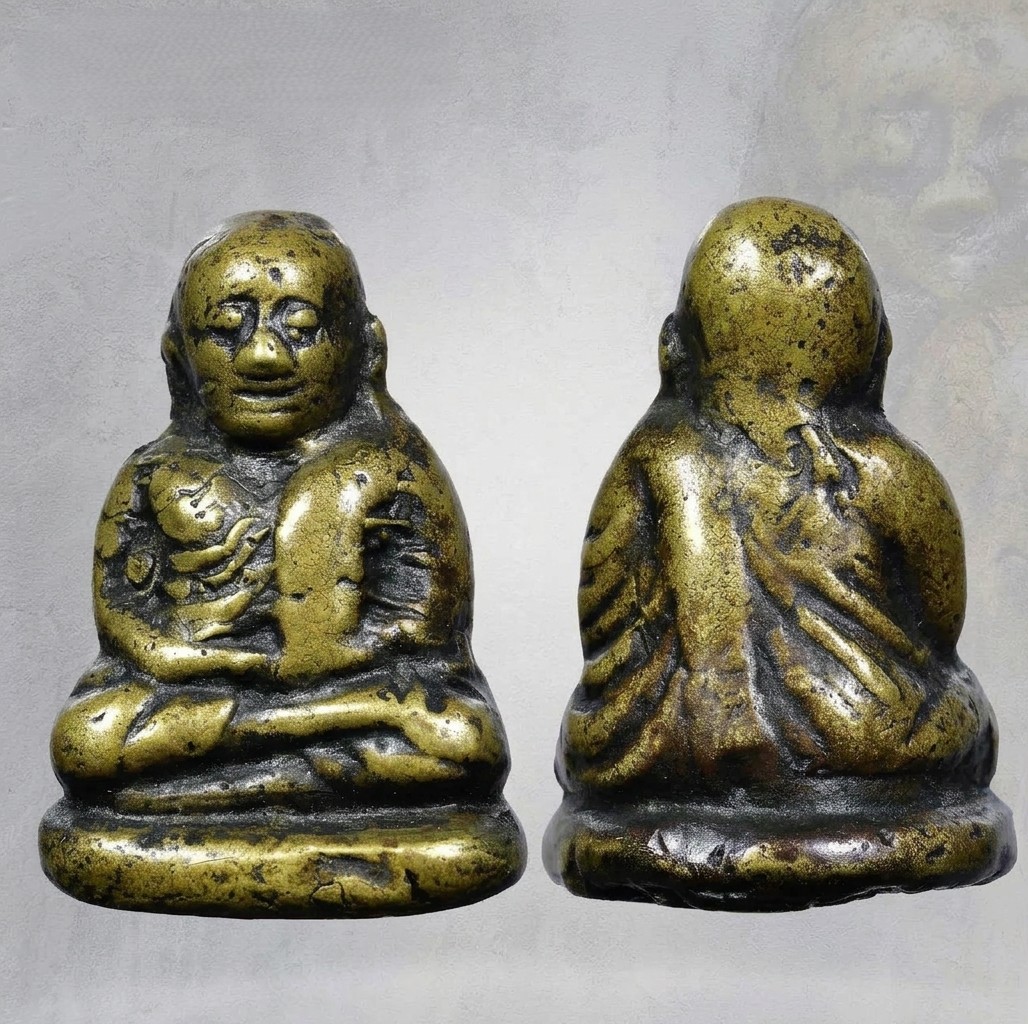
The metal objects made in his lifetime are chiefly the seated self-image, and two hoe-shaped casts. The seated image is mainly brass. Gold, silver and copper were also put into the same melt. The surface is often uneven. That early uneven mold is called the sleepy-eye mold, and it is divided by the robe folds into three, four and five folds. A smoother one is called the popular mold. The temple once let people take these early seated images at one baht each. The seated image is large, and was hard for women and children to wear, so the small hoe and the large hoe were cast later. The large hoe is also called the fish-roe mold. The method was a clay mold, then a pour of brass, with gold given by devotees added to the metal.
B.E. 2515 (1972) also has machine-struck self-images. The mold names include the long neck, the counting of banknotes, the dot on the hand, and the figure-eight hand. By then he had been dead for more than fifty years. Those were made later. They are not casts from his lifetime. True and false begin with the year and the mold. Until those two match, a seated old man is not enough to name a mold from his lifetime.