หลวงพ่อเดิม วัดหนองโพ
Luang Phor Derm
Luang Phor Derm of Wat Nong Pho in Nakhon Sawan. He is not Luang Phor Daeng, the teacher of Luang Phor Khun. Chinese can write both names with the same character. In Thai one is Doem and the other is Daeng.
Temple · Wat Nong Pho, Nakhon Sawan · Life dates · B.E. 2403 or 2404 – 2494 (1860 or 1861 – 1951)
Names and readings
- Thai name
- · หลวงพ่อเดิม
- Chinese name used here
- · 龍婆登
- Mandarin near-sound
- · 龍婆登
- Cantonese near-sound
- · 龍婆登
- English spelling
- · Luang Phor Derm
The essay uses the short name after this. A near-sound helps Chinese readers say the name. It is not a second official name.
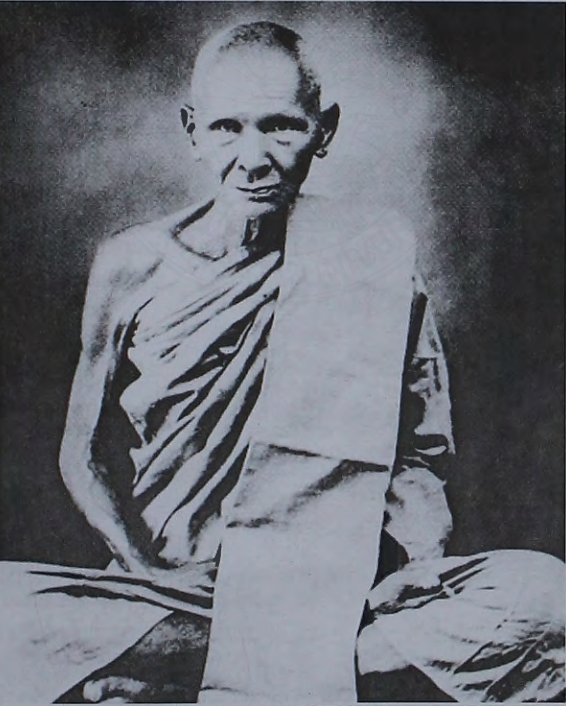
Luang Phor Derm
Luang Phor Derm of Wat Nong Pho in Nakhon Sawan. He is not Luang Phor Daeng, the teacher of Luang Phor Khun. Chinese can write both names with the same character. In Thai one is Doem and the other is Daeng.
Luang Phor Derm was abbot of Wat Nong Pho in Nakhon Sawan. Lay name Doem Phumani. Monastic name Phutthasaro. Rank Phra Khru Niwat Thammakhan. Separate the men first. This monk's Thai name is Luang Phor Doem. The teacher in the Luang Phor Khun article is Luang Phor Daeng. Chinese can write both with a similar sound. They are two men, two temples, two provinces. This page is only the monk of Wat Nong Pho.
Two dates of birth
Later records give two birth dates, so they have to be set out at the start. They are not one day written twice. One is Friday 8 February B.E. 2403 (1861), the thirteenth waning day of the third lunar month, a monkey year. The other is 6 February B.E. 2404 (1861). The father was Niam, of Noen Makok in Phayuha Khiri. The mother was Phu, of Nong Pho. He was the first child. The grandparents named him Doem because he was the first. In this name, Doem means the first one.
Ordination
On Sunday 31 October B.E. 2423 (1880) he was ordained in the hall of Wat Khao Kaeo, Phayuha Khiri. The preceptor was Luang Phor Kaew of Wat Intharam, also called the inner temple. The chanting teacher was Luang Phor Ngern of Wat Phra Prang Lueang, rank Phra Khru Phayuha Nusak. That Luang Phor Ngern is not the monk of Wat Bang Khlan in Phichit. The instructing teacher was Luang Phor Thet of Wat Sa Thale. The monastic name was Phutthasaro. Afterwards he studied scripture and ritual knowledge with a Luang Pho Chom at Wat Nong Pho, and ritual knowledge with a layman of the village named Phan. Later he was abbot of Wat Nong Pho, district ecclesiastical head of Phayuha Khiri, and a preceptor.
The ritual knife, and the other objects
The object most often sought under his name is the ritual knife. The Thai word means a doctor's knife, a small knife used by a ritual specialist, not a weapon for harming people. The Chinese phrase that a wish is always answered is a later market saying about power. It is not proof that a knife is genuine. Besides the knife there are the beckoning lady, lions, takrut, yantra cloth, footprints and rings. These are different objects. A knife still has to be asked which year, which metal, and whether the blade and the handle match the mold. Until those match, his name on a knife is not enough to call it a knife from his lifetime.
Among those who came to study, the names on record include Luang Phor Kan of Wat Khao Kaeo, Luang Phor Kuay of Wat Khositaram, Luang Phor Chuea of Wat Mai Bampen, and Luang Phor Chanan of Wat Amphan. These are students' names. Their objects are not the same batch as his knife.
Death
He died on 22 May B.E. 2494 (1951). That day agrees. The age depends on which birthday is used. From 6 February B.E. 2404 the age is ninety. From 8 February B.E. 2403 it is about a year more. The vassa count is written both as seventy and as seventy-one. A vassa is one rains retreat after full ordination. A difference of one year or one vassa is a difference in where the count starts, not two death dates. The year is in the reign of Rama IX.