Thai-script chant · Thai pronunciation · About 17 seconds · Synthesized recitation
A prayer for safe travel and protection | คาถาบูชาหลวงปู่ทวด → Khatha Bucha Luang Pu Thuat → Ka-tha Bu-cha Luang Pu Thuat
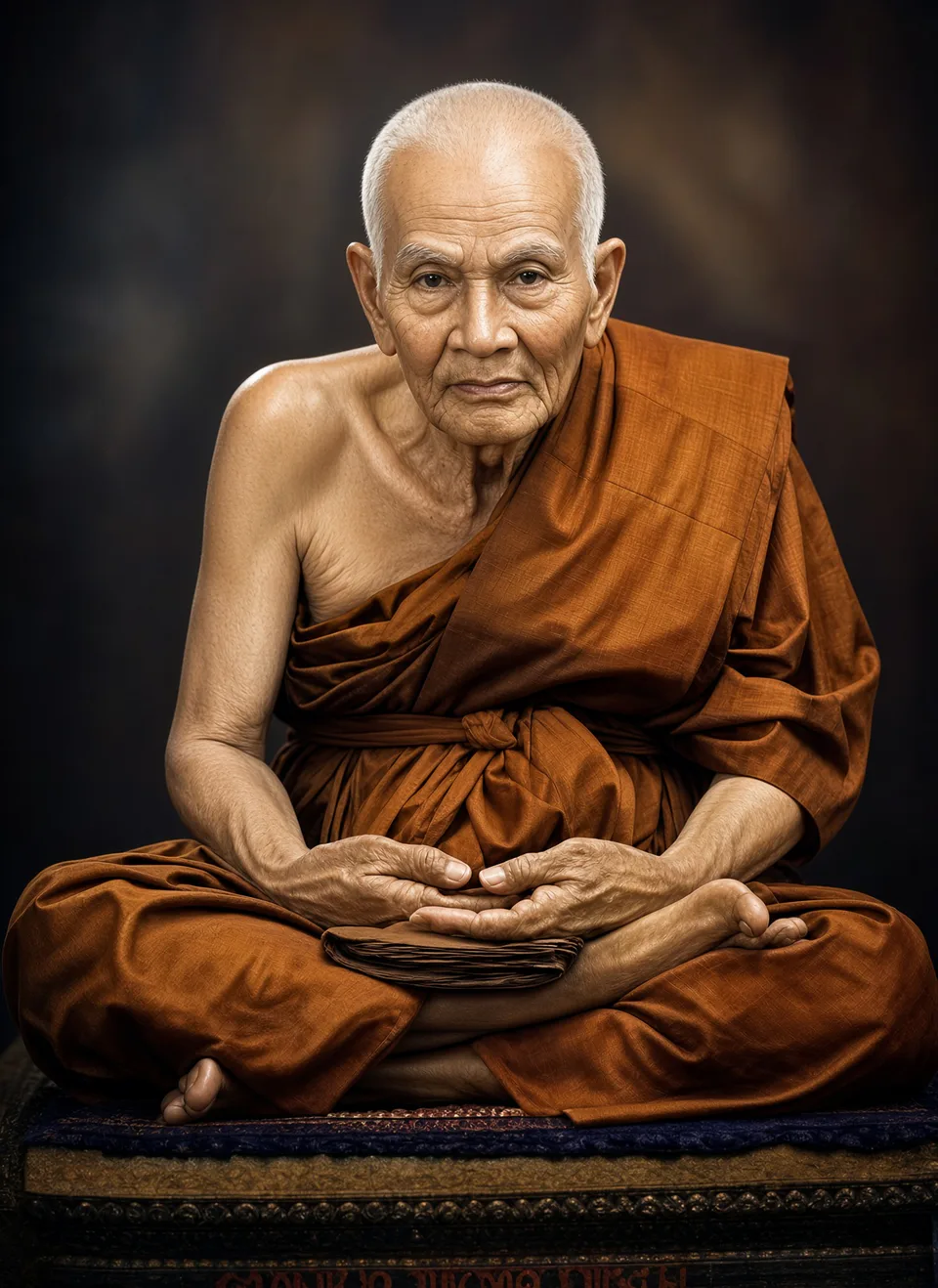
Recitation only, without commentary or music.
Original chant
Thai-script pronunciation
นะโม โพธิสัตโต อาคันติมายะ อิติภะคะวา นะโม โพธิสัตโต อาคันติมายะ อิติภะคะวา นะโม โพธิสัตโต อาคันติมายะ อิติภะคะวา
Romanized reading guide
Namo phothisatto, akhantimaya, iti phakhawa. Namo phothisatto, akhantimaya, iti phakhawa. Namo phothisatto, akhantimaya, iti phakhawa.
About this chant
Luang Pu Thuat is one of the best-known sacred figures of southern Thailand and is readily recognised in Chinese-speaking Thai-amulet circles. Thai tradition often calls him Luang Pho Thuat Yiap Nam Thale Chuet, “the venerable elder who stepped on seawater and made it fresh,” and closely associates his devotion with Wat Chang Hai in Pattani.
The core homage consists of one line: “นะโม โพธิสัตโต อาคันติมายะ อิติภะคะวา.” The same wording appears in Thai academic research, public-sector material and devotional publications. A common sequence is to recite the preliminary homage Namo tassa three times and then this line three times. Because TAMRA already publishes Namo tassa separately, the recording for this article contains only the complete Luang Pu Thuat line, repeated three times.
The translation requires caution. Thai scholarship expressly notes that the formula is not a complete sentence that can be translated word for word according to standard Pali grammar; in particular, the transmitted form “อาคันติมายะ” does not yield an uncontested standard parsing. This article therefore gives only the traditional overall sense: “I pay homage to Luang Pu Thuat as a bodhisatta; may his virtue and merit be present as a source of protection.” This is a devotional interpretation, not a claim that every syllable has an undisputed literal Pali equivalent.
Devotees commonly recite the formula before travel, driving or sailing, or when seeking reassurance and protection from danger. These uses belong to religious and folk belief; they are not guarantees of physical safety. Recitation does not replace careful driving, seat belts, vehicle maintenance, legal compliance or other practical precautions.
References
- Journal of Social Sciences and Humanities Research in Asia — Luang Pu Tuad devotional study
- Prince of Songkla University Southern Information — Luang Pu Thuat and Wat Chang Hai tradition
- Public Relations Department Region 6 — Wat Chang Hai and Luang Pu Thuat tradition
- Bangkok Metropolitan Administration, Khlong Sam Wa District — homage text and devotional interpretation
- Mahachulalongkornrajavidyalaya University — Luang Pu Tuad cross-border devotional study
Further reading · Related items available now
Continue from this subject to current listings and auctions.
Matches prioritize the master, temple and amulet type. When fewer than three match, other current items are added at random.
Public comments
Comments are public and show only your member name.
…
Saving, comments and Community Review need an approved community membership. Reading does not.