Thai-script chant · Thai pronunciation · About 21 seconds · Synthesized recitation
A prayer for sufficient food, necessities, strength and livelihood | พระคาถาฉิมพลี คุณแม่บุญเรือน → Phra Khatha Chimphli Khun Mae Bunruean → Phra Katha Chimphli · Khun Mae Bunruean
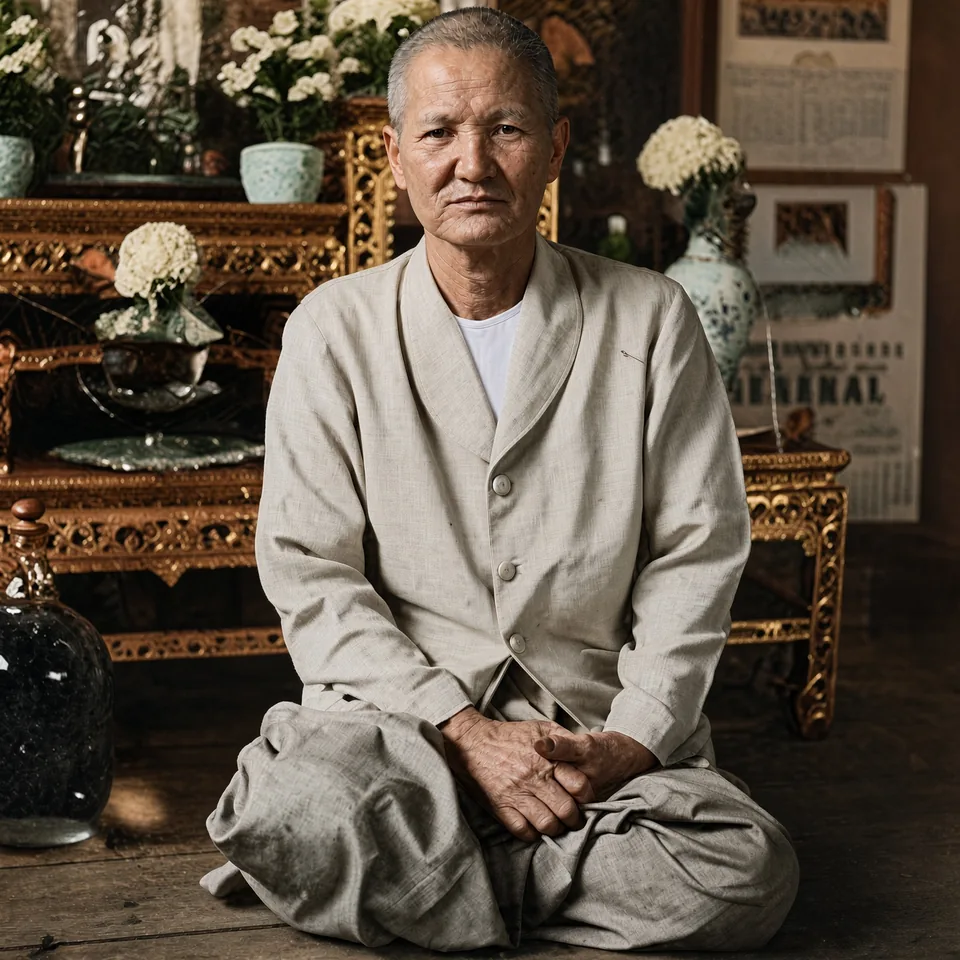
Recitation only, without commentary or music.
Original chant
Thai-script pronunciation
นะชาลีติฉิมพาลี จะ มหาเถโร สุวรรณะมามา โภชนะมามา วัตถุวัตถามามา พลาพลังมามา โภคะมามา มหาลาโภมามา สัพเพชะนา พหูชะนา ภวันตุเม
Romanized reading guide
Na cha li ti Chimphali cha maha thero Suwanna mama, bhochana mama, watthu wattha mama Phala phalang mama, bhoga mama, maha labho mama Sappe chana, phahu chana, bhawantu me
About this chant
This short verse is frequently circulated in Thailand as a chant for venerating Khun Mae Bunruean and is closely associated with devotional practice at Wat Awut Wikasitaram. Khun Mae Bunruean Tongboontem was a twentieth-century Thai female Buddhist practitioner. Careful sources describe her as a devout laywoman, although devotees also address her respectfully as Khun Mae or Mae Chi. She was not a male monk.
The classification needs care. Bunruean's name does not occur in the four-line text. A publication from the Royal Thai Air Force's religious-affairs division titles it Phra Khatha Chimphli, while other Thai sources identify it with the veneration of the elder Sivali. “Khun Mae Bunruean worship chant” therefore describes how the verse is used within her devotional lineage; it does not mean that every line addresses her directly.
The verse asks for gold or radiance, food, clothing and material necessities, strength, provisions and great gain to be present. Devotees consequently use it when praying for a stable livelihood and freedom from material want. Some Thai sources prescribe different repetition counts according to the day of the week, but those counts are a later practice rather than part of the four-line text. The accompanying recording presents the complete main verse once.
The wording combines Pali-like expressions, Thai mantra usage and repeated mama phrases. It should not be presented as ordinary grammatical Pali with a false word-for-word translation. Its overall sense is a wish that food, necessities, strength and the means for an honest livelihood may become sufficient. These are devotional beliefs, not promises of wealth, health or business success; the chant is best paired with ethical work, generosity and responsible conduct.
References
Further reading · Related items available now
Continue from this subject to current listings and auctions.
Matches prioritize the master, temple and amulet type. When fewer than three match, other current items are added at random.
Public comments
Comments are public and show only your member name.
…
Saving, comments and Community Review need an approved community membership. Reading does not.